Rational expressions are algebraic fractions in which both the numerator and the denominator are polynomials. These expressions follow the arithmetic rules of numerical fractions but require extra care due to the presence of variables. A fundamental part of working with rational expressions is identifying values that make the expression undefined, typically those that result in division by zero or undefined radicals.
Determining the Domain
The domain of a rational expression includes all real numbers except those that make the denominator zero or violate constraints from square roots. Consider the expression:

Factoring the denominator:

The domain excludes x=3 and x=-3, so the domain is all real numbers except these values.
Simplifying and Multiplying
Simplifying involves factoring both numerator and denominator and canceling common terms. For example:

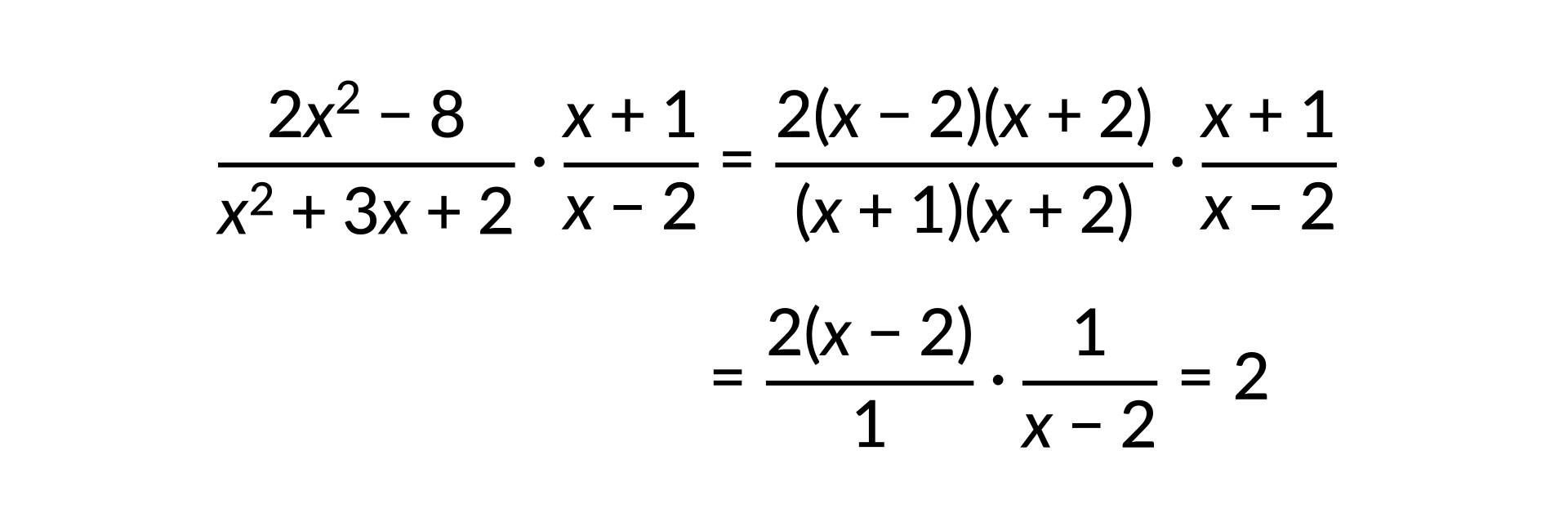
For multiplication:
Dividing and Adding Rational Expressions
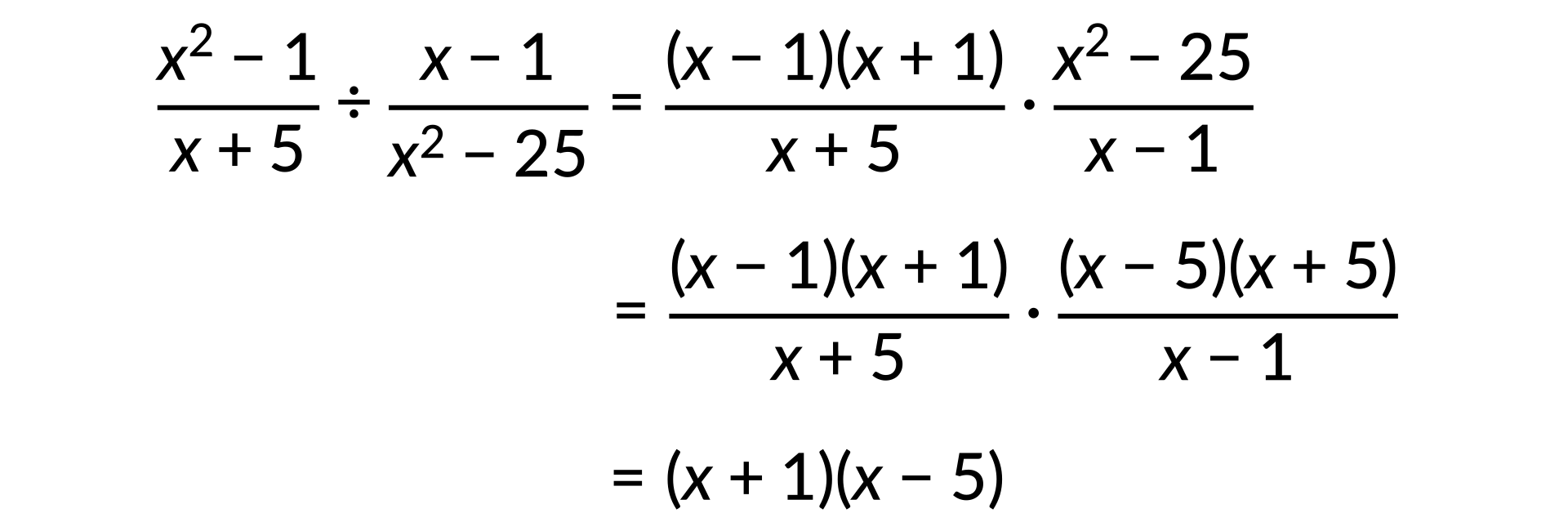
To divide, invert the second expression:
For addition:
Applications and Structure
Rational expressions are used in modeling rates, proportions, and other variable relationships. Operations involving these expressions appear in problems related to motion, growth, resistance in circuits, and optimization. Understanding how to simplify, multiply, divide, and combine rational expressions is foundational for problem-solving in algebra and applied sciences.
In a growing city, expanding limits and new housing developments increase the population, leading to crowding. Population density quantifies how crowded the city becomes.
It can be modeled as a rational expression in terms of time, t, a fraction where the numerator is the total population and the denominator is the total area.
The domain of this rational expression is found by factoring the denominator and excluding values that make it zero.
This can be visualized on a graph as breaks where the function becomes undefined.
Simplifying a rational expression involves factoring the numerator and the denominator and canceling common factors—only when the denominator is not zero.
Multiplying rational expressions involves factoring each expression into its simplest form, and then multiplying the numerators and the denominators together. The resulting expression is simplified by canceling any common factors.
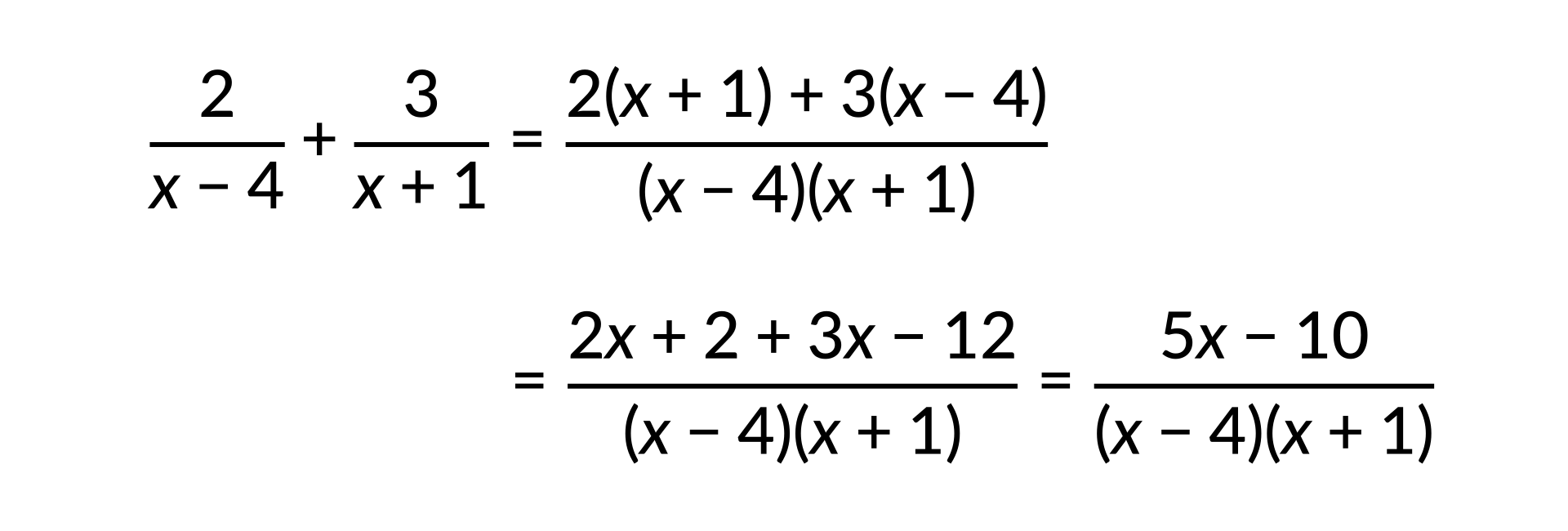
Adding these expressions requires a common denominator, formed by multiplying the denominators and including shared terms only once. Each expression is rewritten with this base and a numerator adjusted with the extra terms. Once the denominators are aligned, the numerators are combined to obtain the result.

 繁體中文
繁體中文


