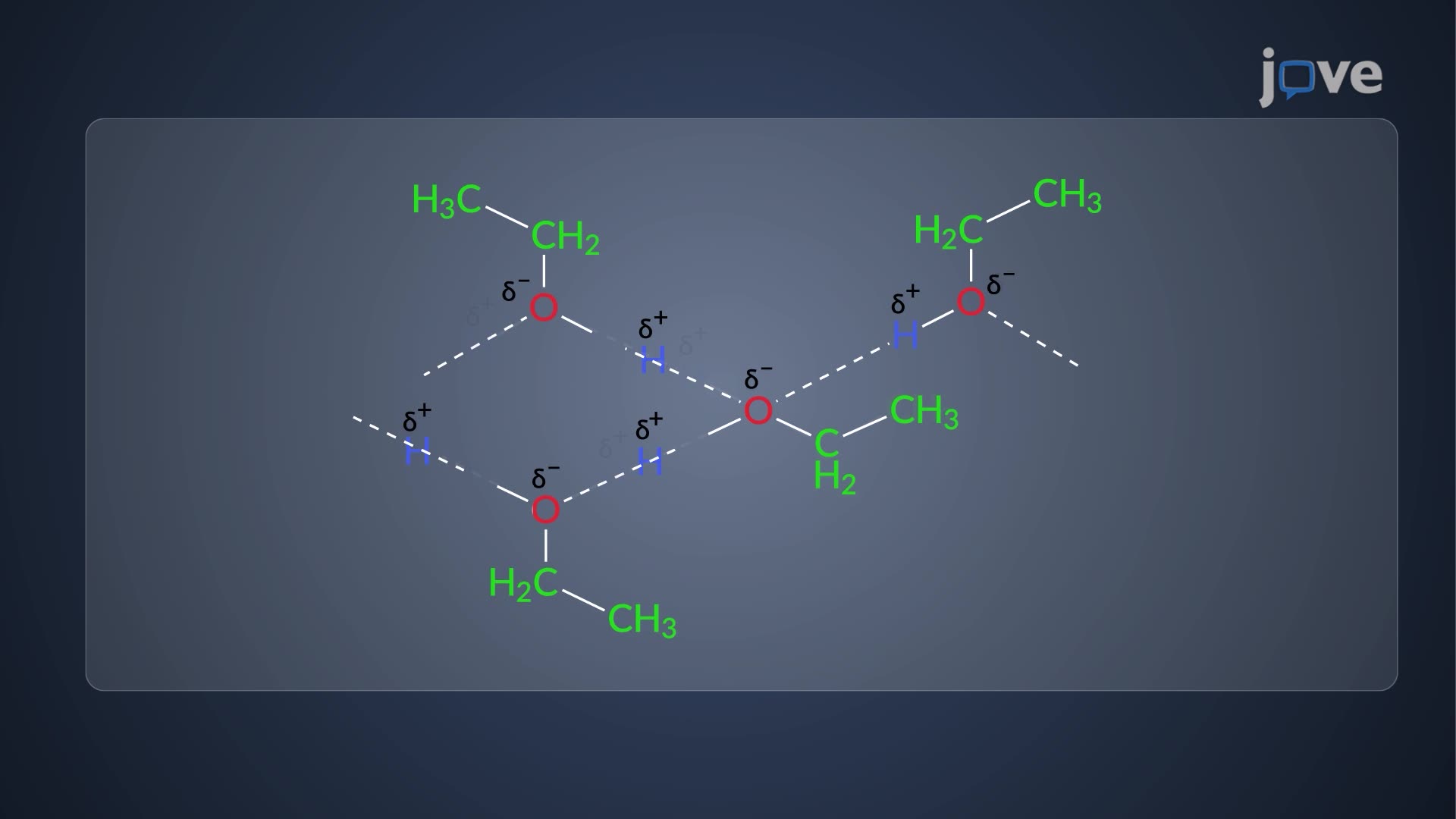
Thin-layer chromatography (TLC) is a chromatography technique that separates compounds based on their polarity. TLC typically uses polar silica gel, a form of silicon dioxide, as the stationary phase. The silica gel contains hydroxyl (OH) groups on its surface, which form hydrogen bonds with polar compounds, influencing their adhesion to the stationary phase.
To begin the analysis, a mixture of compounds is spotted on the starting line on the TLC plate using a thin capillary. The bottom of the plate is immersed in the mobile phase, which is usually an organic solvent that is less polar than the stationary phase. The solvent travels up the plate by capillary action, carrying the solute spot. As the solvent travels up the plate, the components of the mixture partition between the mobile phase or the stationary phase. The polar components interact more strongly with the polar stationary phase, which results in them traveling slowly and only moving a short distance on the TLC plate. The less polar components of the sample are more soluble in the mobile phase and tend to interact more with the mobile phase, allowing them to travel farther up the TLC plate.
Understanding the polarity of the components and the mobile phase is essential for predicting separation outcomes. The mobile phase (solvent) should be polar enough to move the most polar solute effectively while ensuring good compound separation. The retardation factor, Rf, is defined as the ratio of the distance traveled by a component to the distance traveled by the mobile phase. Understanding this concept is crucial in TLC analysis. The Rf of a compound is dependent on the mobile phase used. The Rf is large for nonpolar compounds with a nonpolar mobile phase. Low Rf values are seen for polar components with a nonpolar mobile phase.
In thin-layer chromatography or TLC, analytes mixed with the mobile solvent travel through a thin layer of polar silica or alumina gel by capillary action.
The analytes are spotted on the lower part of the plate in microgram quantities such that the top of the mobile phase is below the bottom of the spots so that it moves evenly up the plate.
The characteristic affinity of an analyte for a set of chromatographic conditions is expressed as the retardation factor, Rf, which is the distance traveled by the solute divided by the total distance traveled by the mobile phase.
TLC separates a sample mixture into distinct spots by moving components at different rates across the stationary phase, each characterized by its specific Rf value.
So, it can be used to predict whether a given set of chromatographic conditions will adequately separate the analytes in a mixture.
TLC is also used to predict separation in column chromatography and identify unknown compounds by matching their Rf values to known compounds.

 繁體中文
繁體中文