Overview
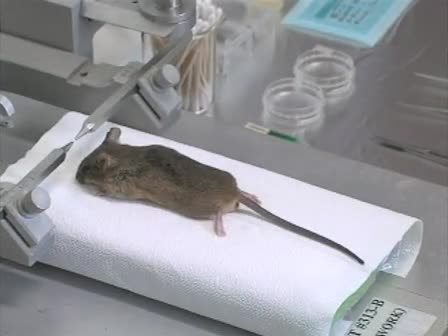
This protocol outlines the preparation and maintenance of neocortical slices in organotypic culture, enabling electrical recordings from pyramidal neurons. The method involves cutting acute slices from young rats and transfecting them for further analysis.
Key Study Components
Area of Science
- Neuroscience
- Electrophysiology
- Cell Biology
Background
- Organotypic cultures allow for the study of neuronal properties in a controlled environment.
- Pyramidal neurons are crucial for understanding cortical functions.
- Transfection techniques enable genetic manipulation for research purposes.
- Electrical recordings provide insights into neuronal activity and properties.
Purpose of Study
- To obtain electrical recordings from pyramidal neurons in organotypic slices.
- To compare properties of transfected neurons with those from acute slices.
- To investigate the effects of genetic manipulations on neuronal behavior.
Methods Used
- Preparation of acute slices from postnatal rats (P8-P10).
- Transfection of slices with Bic transfection of CD NA.
- Culturing slices for three to seven days.
- Electrical recordings using current or voltage clamp techniques.
Main Results
- Transfected pyramidal neurons exhibit properties similar to those from acute slices.
- Transfection of GFP does not alter the intrinsic properties of the neurons.
- Whole cell recordings allow for detailed analysis of ion channel behavior.
- Results support the viability of organotypic cultures for electrophysiological studies.
Conclusions
- Organotypic slices are effective for studying neuronal properties post-transfection.
- The method preserves the physiological characteristics of pyramidal neurons.
- This approach facilitates research on genetic manipulations in cortical neurons.
What is the main goal of this protocol?
The main goal is to obtain electrical recordings from pyramidal neurons in organotypic slices of neocortex.
What age of rats is used for slicing?
Acute slices are prepared from rats at postnatal ages P8 to P10.
How long are the slices cultured?
The slices are cultured for three to seven days.
What type of recordings are obtained from the neurons?
Electrical recordings are obtained using current or voltage clamp techniques.
Does transfection affect the properties of the neurons?
Transfection of GFP does not alter the intrinsic properties of the neurons.
Why are organotypic cultures used?
They allow for the study of neuronal properties in a controlled environment while preserving physiological characteristics.

 繁體中文
繁體中文