When analyzing the motion of falling objects, it is essential to consider not only the force of gravity but also the opposing force of air resistance. A practical example involves releasing a heavy test weight during a safety check on a ship. As the weight falls from rest, gravity accelerates it downward while air resistance exerts an upward force that increases with velocity. This dynamic interplay of forces is well described by differential equations, which provide a mathematical framework for modeling the object’s changing velocity over time.
Forces and Differential Modeling
According to Newton’s Second Law, the net force on the falling weight determines its acceleration. Gravity exerts a constant force equal to the object's mass times the gravitational acceleration, while air resistance is typically modeled as being proportional to the object’s velocity. When these forces are combined, the net force yields a first-order differential equation relating the rate of change of velocity to the velocity itself.
Exponential Behavior and Terminal Velocity
Solving the resulting differential equation gives a velocity function that increases over time but asymptotically approaches a finite limit. This behavior reflects the gradual balancing of gravity and air resistance, culminating in a state known as terminal velocity—the point at which acceleration ceases, and the object falls at a constant speed. With a mass of 10 kg and a drag constant of 2 N·s/m, the calculated terminal velocity is 49 m/s. This outcome illustrates how differential equations effectively model real-world motion and reveal the role of air resistance in limiting acceleration during free fall.
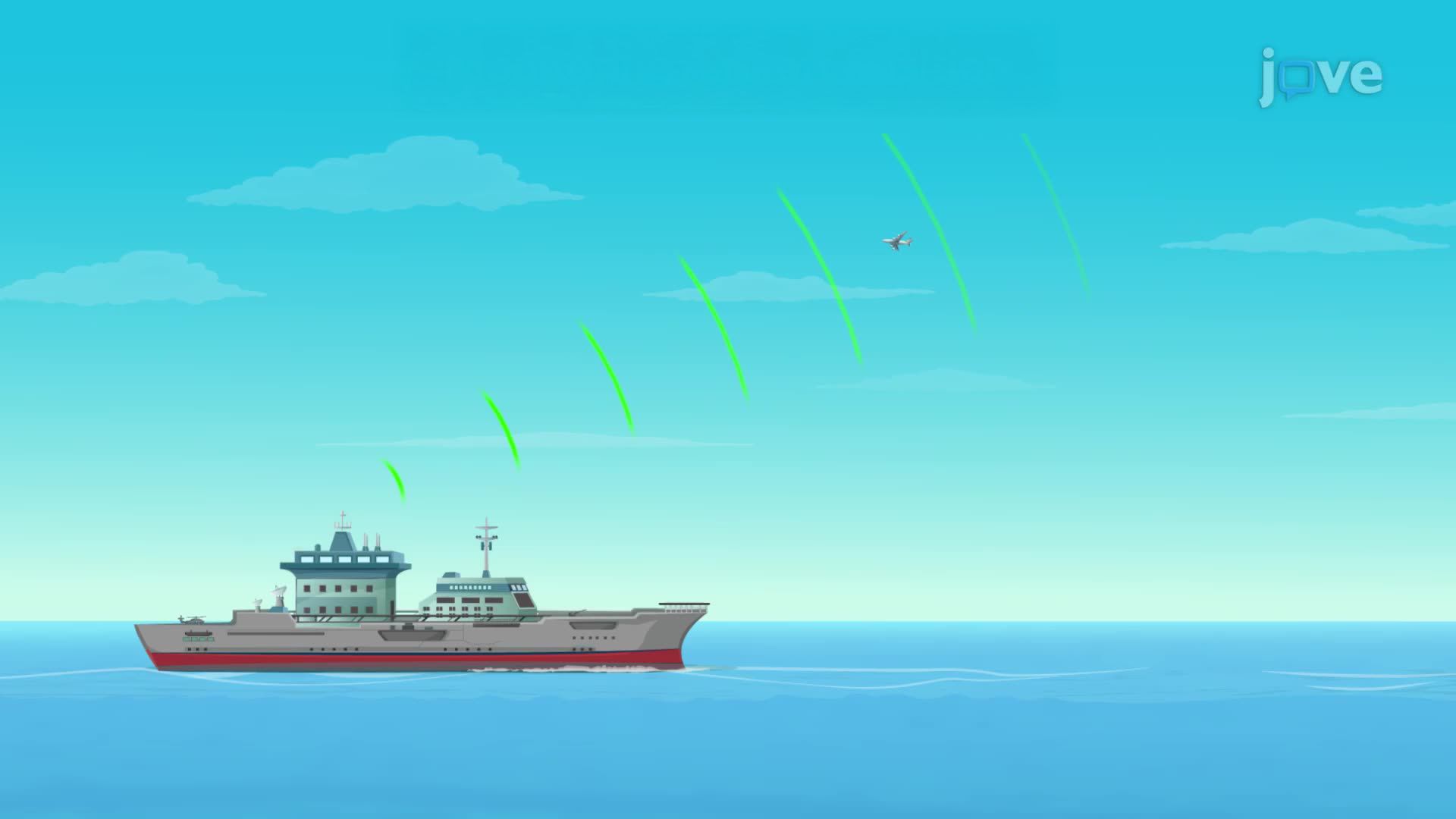
A safety check on a ship uses a heavy test weight. The weight is lifted and then released to study how air resistance affects motion. Once it is let go, the weight starts from rest and falls through the air.
Gravity pulls it downward, while the air pushes upward against its motion. According to Newton’s Second Law, the change in speed depends on the net force.
Combining these forces gives a differential equation that links acceleration to speed. Dividing the equation by mass gives a simpler form.
Defining the ratio of the drag constant to the mass as the constant b makes the differential equation easier to separate.
Integrating the equation and rewriting it to find the equation for velocity as a function of time gives an exponential equation. Using the initial velocity of zero helps find the remaining constant in the solution.
As time increases, the velocity approaches a constant value known as terminal velocity. With a weight of 10 kilograms and a drag constant of 2 newton-seconds per meter, the model predicts a terminal velocity of 49 meters per second.

 繁體中文
繁體中文