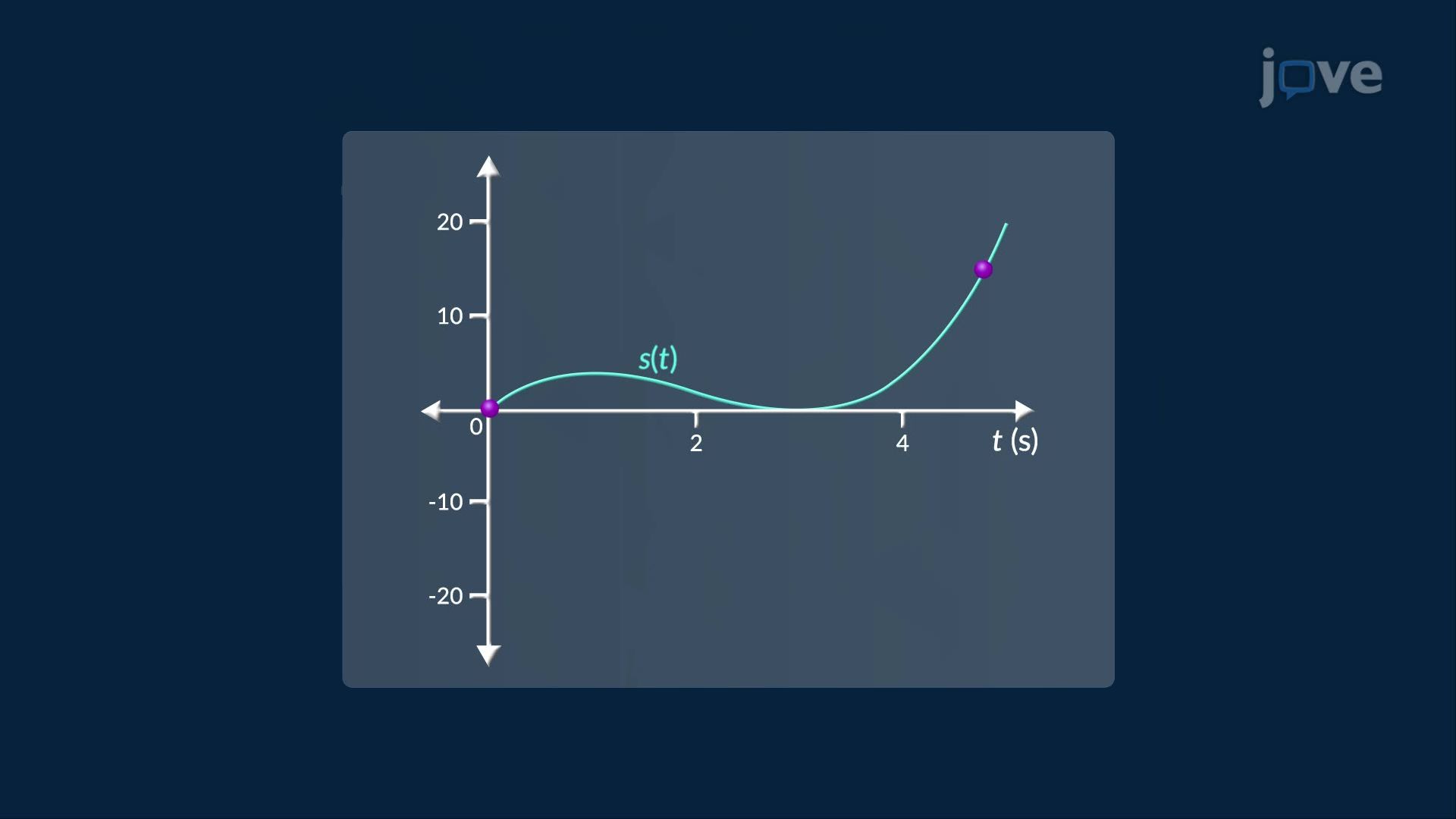
In classical mechanics, motion is often described through relationships between spatial coordinates and time. A car moving along a straight highway with constant acceleration serves as a simple case where velocity is an explicit function of time. This scenario results in a linear equation, enabling straightforward analysis using basic differentiation techniques.
In contrast, a satellite in circular orbit follows a path defined by an implicit function. The position of the satellite is constrained by the equation of a circle, which links the coordinates x and y without isolating a dependent variable.
Implicit Differentiation for Circular Motion
For a satellite in circular orbit, the position satisfies the equation:

To determine the instantaneous direction of motion—represented by the slope of the tangent line—implicit differentiation is applied. Differentiating both sides with respect to x:




This derivative represents the slope of the tangent line at any point (x,y) on the satellite's path.
Tangent Line Equation
Using the point-slope form, the tangent line at the point (x1,y1) is:

This equation provides the direction of the satellite’s velocity vector at a given position. Implicit differentiation thus plays a central role in analyzing the motion of objects constrained by geometric paths, such as satellites in orbit.
When a car drives on a straight highway with constant acceleration, its velocity is an explicit function of time and gives a linear relationship between time and velocity.
A satellite in circular orbit follows a path described by an implicit function, where x and y are linked together in one equation without isolating a dependent variable.
For the satellite at a given position, the slope shows the instantaneous direction of the motion, and the tangent line shows the velocity vector of the satellite.
To find the slope and tangent, differentiation is applied to the implicit function. To understand the concept of implicit differentiation, consider the equation of a circle.
First, differentiate both sides of the equation with respect to the independent variable. The resulting expression yields the slope of the tangent line.
This slope is then evaluated by substituting the x and y coordinates of the point of tangency.
Finally, the tangent line equation is constructed using the slope and these coordinates, expressed in terms of the original variables.
Similarly, for a moving satellite, at any point, the slope and tangent can be found using the concept of implicit differentiation.

 繁體中文
繁體中文