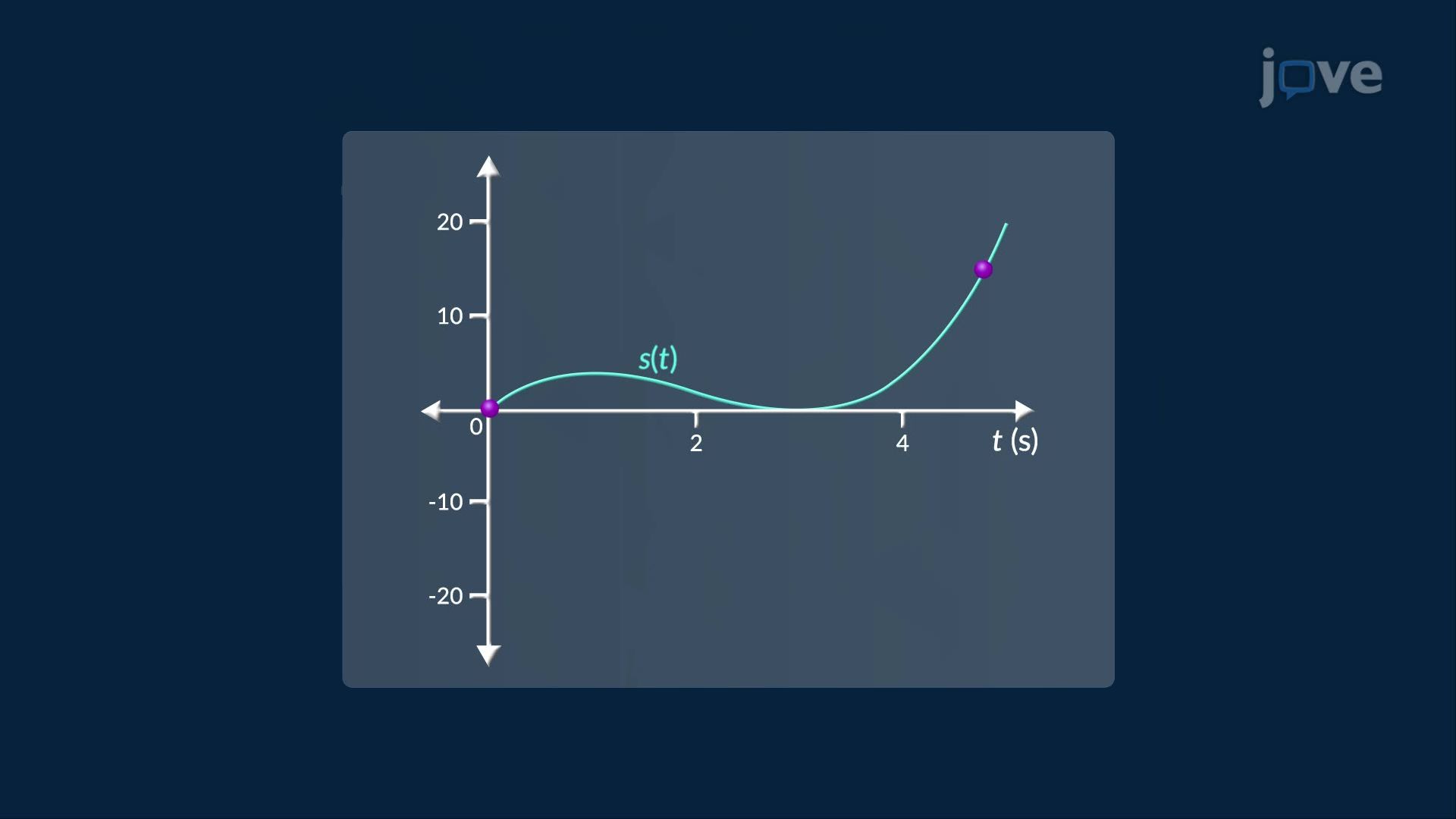
Understanding the maximum and minimum values of a function is essential for analyzing its overall behavior. These values, often referred to as extrema, provide insight into how a function behaves across its domain. In mathematical terms, extrema can be either local—representing peaks and valleys within a limited region—or absolute, indicating the highest or lowest points over an entire interval.
A function’s extrema occur at critical numbers, which are values in the domain where the derivative is either zero or does not exist. According to Fermat’s Theorem, if a function has a local extremum at a point and is differentiable there, then the derivative must be zero at that point. However, the converse is not necessarily true—not all critical numbers correspond to local extrema. Some may indicate inflection points or flat regions without any extreme significance.
Importantly, critical numbers also include points where the derivative is undefined. These cases often arise in functions with sharp corners or cusps, such as the absolute value function, where traditional differentiability fails but a local maximum or minimum may still be present.
To determine the absolute extrema of a function on a closed interval [a, b], the Closed Interval Method is employed. This procedure consists of three steps:
By comparing these values, the greatest and least among them are identified as the absolute maximum and minimum on the interval. This systematic approach ensures that all potential extremal points are considered, providing a comprehensive view of the function's extremal behavior over a given domain.
Finding where a function reaches its highest or lowest values helps describe its overall behavior. Identifying these values is like finding peaks and valleys along a hiking trail.
A function may reach these values at numbers where its derivative is zero or undefined. These numbers are called critical numbers—numbers in the domain where the derivative is zero or undefined.
According to Fermat's Theorem, if a function has a local maximum or minimum at a number and the derivative exists there, then the derivative must be zero.
This means that local extrema always appear at critical numbers, although not every critical number corresponds to an extremum.
Some functions have sharp corners where the derivative is undefined, yet a local extremum can still be present.
To find the absolute highest or lowest values over a closed interval, the Closed Interval Method is used. This involves three steps: identify critical numbers in the open interval, evaluate the function at those numbers, and also at the endpoints. The largest and smallest of these results give the absolute maximum and minimum.

 繁體中文
繁體中文