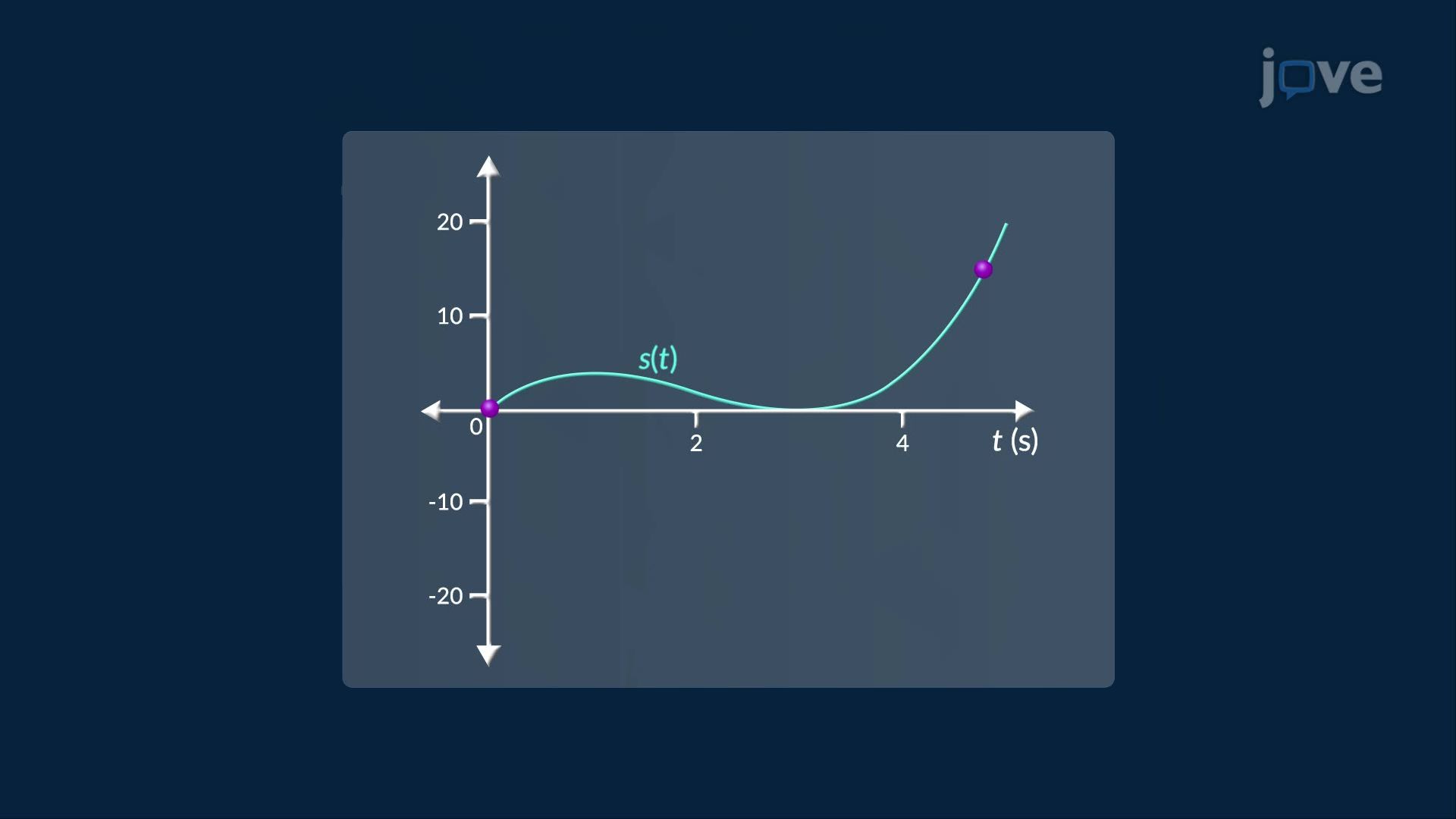
In differential calculus, understanding how a quantity changes at an exact point is central to interpreting dynamic systems. This can be illustrated by analyzing a car traveling along a winding road. The car’s trajectory is represented as a continuous curve, and the direction in which it moves at any instant is given by the tangent to that curve. In contrast, the secant line, intersecting the curve at two points, captures how the car’s position changes over an interval — an average behavior.
The secant line provides a means to approximate the change in function values between two points. For a function f(x), the slope of the secant line through two points is:

This ratio quantifies the average rate of change over the interval. However, as the point x+h approaches x, the secant line transitions smoothly into the tangent line. This conceptual approach forms the basis of the tangent line problem — determining the instantaneous rate of change at a single point on the curve.
The slope of the tangent line is defined as the limit of the secant slope as h approaches 0, giving the derivative f′(x). With this slope known, the precise equation of the tangent line at a point (x0,f(x0)) is written using the point-slope form:

This formulation captures the direction and rate of change of the function at that specific point. It plays a foundational role in mathematical modeling across physics, engineering, biology, and economics, where predicting instantaneous trends is crucial.
Imagine a car traveling on a winding road; its position over time can be represented as a smooth curve on a graph.
To observe the change in the car's position between two points, a straight line can be drawn connecting them - this line is called a secant line.
The slope of the secant line captures the car’s average velocity during that interval. It represents the change in position divided by the change in time.
To understand how the car's direction changes at a particular point, the two points along the curve can be moved closer and closer together.
As the change in time approaches zero, the limit of the slope of the secant line transforms into a tangent line.
The tangent line touches the curve at a single point and shares the same instantaneous rate of change as the curve at that point.
The slope of this tangent line gives the instantaneous velocity at that point and is defined as the derivative of the curve at that location.
Multiple tangent lines reveal how the instantaneous velocity varies along the entire curve.
Tangent lines are widely used—for example, in population dynamics, the slope at a point on the population-time curve gives the instantaneous growth rate.

 繁體中文
繁體中文