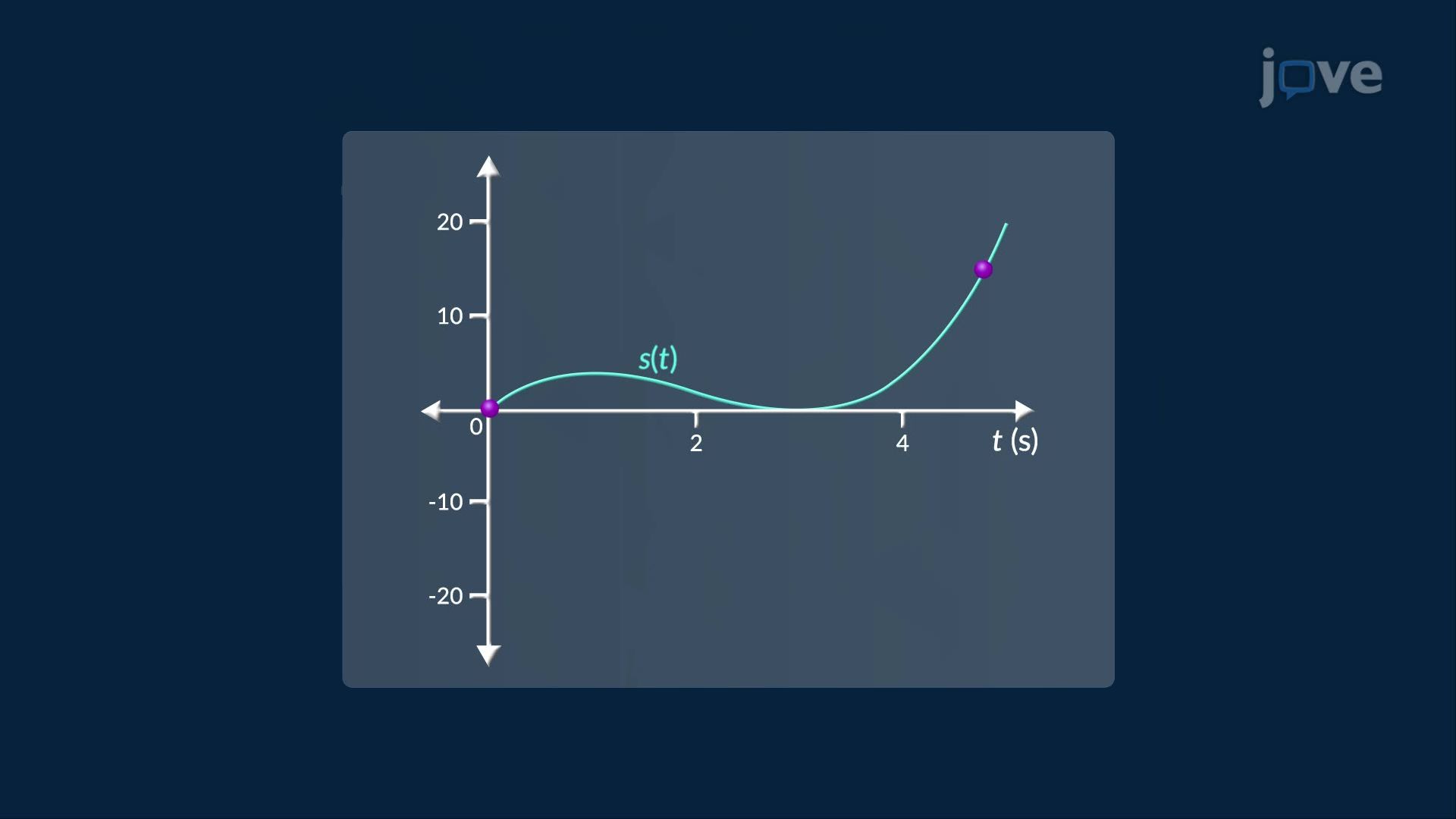
The rate of change is a central concept in mathematics that quantifies how one variable varies in response to another. It serves as a foundational tool in modeling dynamic systems across disciplines such as physics, biology, economics, and engineering. Understanding both average and instantaneous rates of change enables the analysis of behavior in functions that describe real-world phenomena.
For a function f(x) defined over an interval [x1,x2], the average rate of change is calculated by:

This formula represents the slope of the secant line connecting the points (x1, f(x1)) and (x2, f(x2)) on the graph of the function. It provides an overall measure of how the output of the function changes per unit increase in the input over the specified interval. While this rate offers insight into general trends, it does not account for variations within the interval.
To determine how a function changes at a specific point, the instantaneous rate of change is used. This is defined as the limit of the average rate of change as the interval shrinks to zero:

This limit, if it exists, defines the derivative of the function at the point x, denoted as f′(x). The derivative corresponds to the slope of the tangent line to the curve at that point, providing a precise measure of how the function value is changing at that exact input.
Derivatives are instrumental in understanding continuous processes. They enable the modeling of rates of change in motion, growth, decay, and optimization problems, forming the basis of differential calculus and analytical reasoning in scientific investigation.
The rate of change shows how one quantity varies in response to another.
For example, the temperature inside a room varies throughout the day—lower in the early morning, rising during midday, and falling again at night.
This variation in temperature can be represented by a mathematical function, where the temperature is expressed as a function of time.
The average rate of change over a time interval is calculated by dividing the change in temperature by the change in time.
Mathematically, this matches the slope of a secant line connecting two points on the graph.
To find how fast the temperature is changing at a specific instant, the instantaneous rate of change is used.
The limit of the difference quotient as the time interval shrinks to zero gives the exact instantaneous rate, which is the slope of the tangent line at that point.
In real life, the concept of rate of change is used to calculate the rate of concentration change in chemical reactions. The average rate of change gives the change in concentration over a period, and the instantaneous rate of change is the rate of change at a specific moment.

 繁體中文
繁體中文