A derivative quantifies how a function changes in response to variations in its input. It provides a localized rate of change, representing the slope of the tangent line to the function at any given point. When this process is applied systematically across the entire domain of the function, it yields a new function—the derivative function—which encodes the rate of change at every point. This concept is central to calculus and essential for understanding the behavior of dynamic systems in both natural and engineered contexts.
Given a differentiable function f(x), its derivative function f′(x) assigns to each value of x the instantaneous rate at which f(x) is changing. Formally, it is defined as the limit of the average rate of change as the interval becomes infinitesimally small:

This expression, if the limit exists, gives the slope of the tangent to the curve at x. Thus, f′(x) captures the sensitivity of the output to small changes in the input. While the original function describes a quantity’s value across its domain, the derivative function reveals how that value evolves locally.
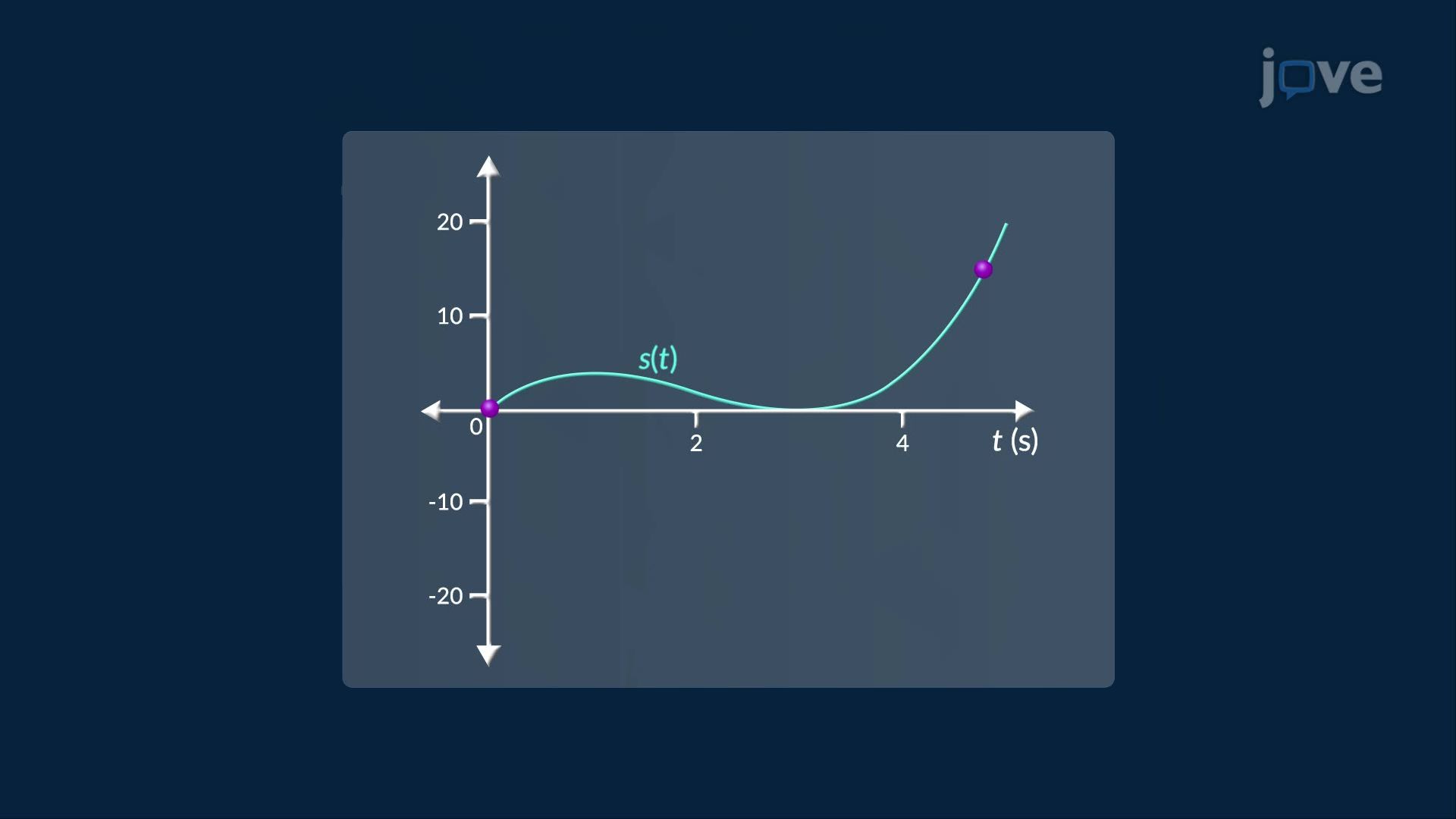
The derivative function plays a critical role in analyzing dynamic systems. In applied contexts, it models quantities such as velocity, growth rate, and marginal cost. For example, in motion analysis, the position function describes location over time, and its derivative—the velocity function—indicates speed and direction at each moment.
Graphically, the derivative function reflects the geometry of the original function’s graph: where f(x) is increasing, f′(x)>0; where f(x) is decreasing, f′(x)<0; and where f′(x)=0, the function has a horizontal tangent, potentially indicating a local extremum. Through this lens, the derivative function serves as a powerful analytical tool in both theoretical and practical investigations.
The derivative measures how the dependent variable changes with respect to the independent variable.
Graphically, the derivative is the limit of the average rate of change as the interval approaches zero.
In mathematical terms, the derivative function, f′(x), assigns a slope to each point on the graph of f(x) —showing how the output changes in response to changes in the input.
When calculated at every point in a function’s domain, it produces a new function—the derivative function.
For instance, at point A, the graph of f(x) is decreasing, and the tangent line has a negative slope. So, the derivative f'(x) takes on a negative value at this point, corresponding to the point A on the graph of f(x).
At point B, the tangent is horizontal or the slope is zero, which means the derivative function is zero. At point C, the slope is positive, shown by a positive value of the derivative function.
As a result, the derivative function shows how rapidly the original function is changing at each point.
One example of a derivative is found in motion, where the derivative of a car’s velocity with respect to time gives an acceleration function.

 繁體中文
繁體中文