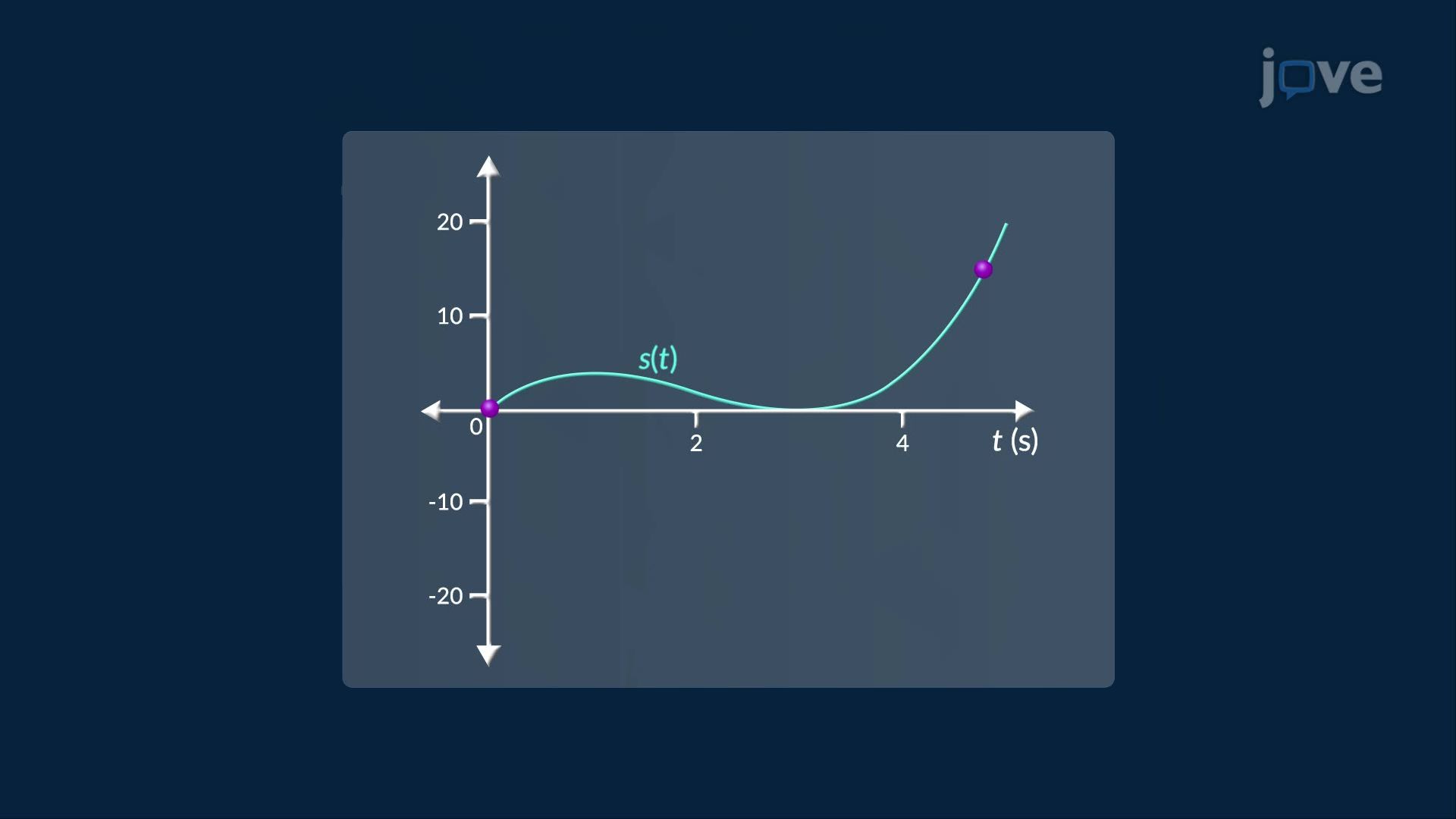
The average value of a function over a closed interval can be interpreted geometrically as the height of a rectangle whose area equals the net area under the curve across that interval. This net area accounts for both positive and negative contributions of the function, providing a single representative value that reflects the function’s overall behavior

A practical illustration of this idea arises when monitoring the temperature inside a greenhouse over a twenty-four-hour period. Although the temperature varies continuously throughout the day, it is often useful to summarize this variation with a single number that represents the average temperature over the entire time interval.
To find out this average, the interval is divided into many small subintervals of equal width. On each subinterval, a representative value of the function is chosen and used as the height of a thin rectangle. The area of each rectangle approximates the contribution of the function over that short segment. Adding the areas of all such rectangles provides an estimate of the total area under the curve.
As the number of subintervals increases and their widths decrease, this approximation becomes increasingly accurate. In the limit, the sum of the rectangular areas converges to the exact accumulated value of the function over the interval. This limiting process corresponds to the definite integral shown above.
When the function remains positive over the interval, the average value can be visualized as the height of a rectangle whose area matches the area under the curve. This geometric interpretation provides a clear and intuitive understanding of how the average value summarizes the behavior of a continuously varying quantity.
The average value of a function over a closed interval is equivalent to the height of a rectangle whose area equals the sum of the positive and negative areas under the curve.
For instance, consider the temperature in a greenhouse recorded continuously over a 24-hour period.
The temperature varies with time, but a single value represents the average temperature.
To calculate this, the interval is divided into small subintervals of equal width. On each subinterval, a representative function value is taken as the height of a thin rectangle. Adding the areas of all such rectangles gives an estimate of the area under the curve.
As the number of subintervals increases, this method approaches a precise value that captures the function’s overall behavior across the interval.
This process leads to an expression involving a definite integral. The result corresponds to the area under the curve of the function, divided by the width of the interval.
For a positive function, this is interpreted as the height of a rectangle whose area equals that under the curve.

 繁體中文
繁體中文