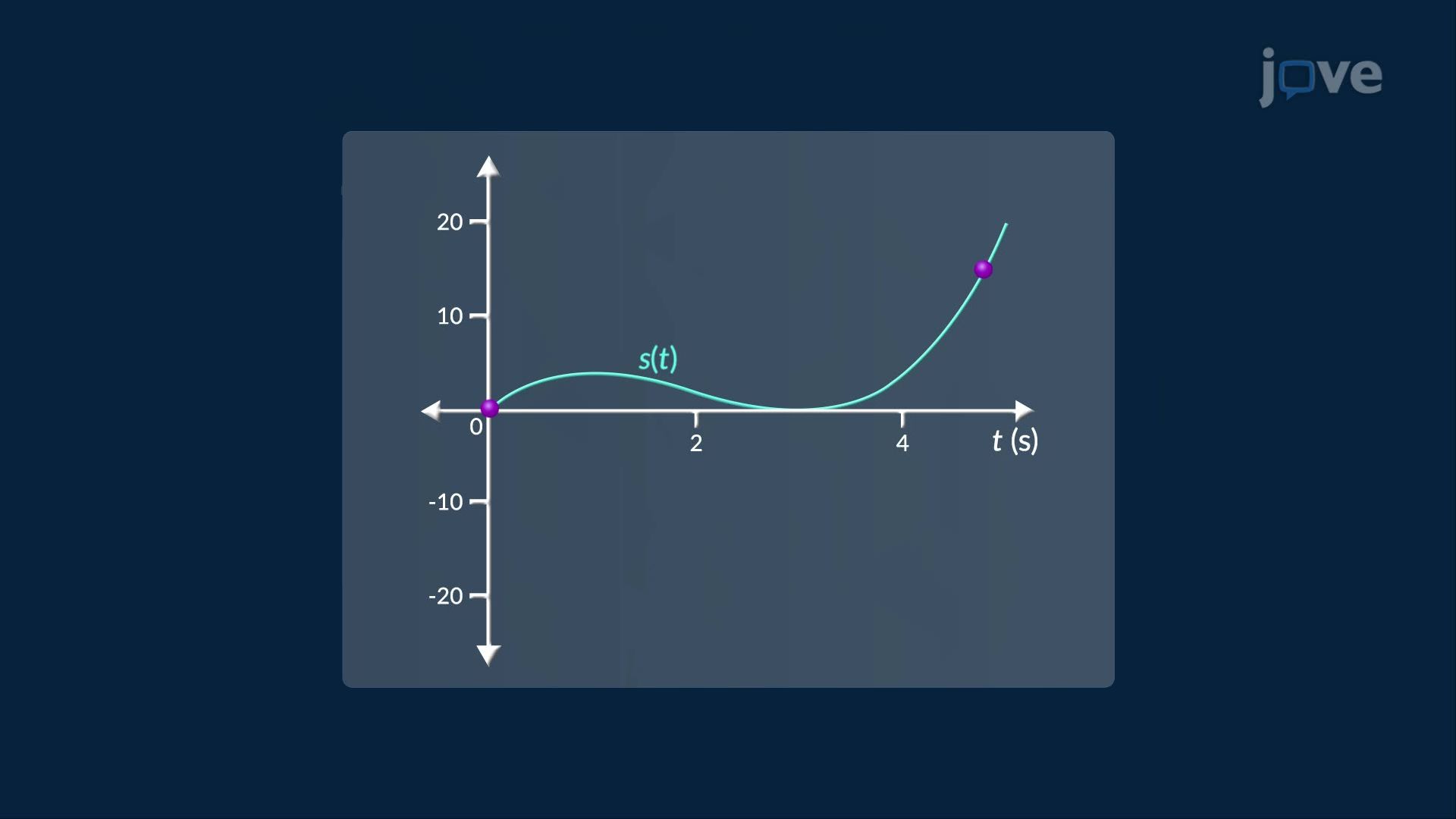
The highest and lowest values of a function, relative to a reference axis, are known as extreme values. These include absolute maximum and absolute minimum values, which represent the highest and lowest points the function reaches across its entire domain. Within a restricted portion of the function, the highest and lowest values are referred to as local maximum and local minimum values, respectively.
Periodic functions, such as sine and cosine, show extreme values at infinitely many points due to their repeating nature. These functions have derivatives that become zero at multiple points, leading to local extrema at numerous locations. Some functions, such as an upward-opening parabola, possess only a minimum value that serves as both a local and absolute minimum, and a downward-opening parabola possesses only a maximum value that serves as both a local and absolute maximum. On the other hand, certain functions may not have any extreme values, like a slanted line, which do not have any absolute or local extrema. But when this slanted line is restricted to a closed interval, the extrema are at the endpoints
The Extreme Value Theorem provides the necessary conditions for the existence of extreme values. The theorem states that if a function is continuous over a closed interval, it must attain both an absolute maximum and an absolute minimum within that interval. However, if a function lacks continuity or is defined on an open interval, it may not possess extreme values. For instance, a function that is discontinuous within its domain may fail to reach its highest possible value. Similarly, a continuous function on an open interval may not attain its highest or lowest values because the endpoints are not included in the domain. These exceptions illustrate the importance of both continuity and a closed interval in guaranteeing the existence of extreme values, as stated by the theorem.
The Extreme Value Theorem guarantees the existence of both an absolute maximum and an absolute minimum for any continuous function defined over a closed interval.
These values can be found where the derivative is zero, undefined, or at the interval’s endpoints.
Consider how temperature changes over a day, modeled as a continuous function over a closed interval. The highest and lowest temperatures are called the absolute maximum and the absolute minimum, or extreme values. These values help summarize the day’s weather.
Over a shorter time span, a temperature higher or lower than nearby values is a local maximum or local minimum.
Now consider another function that describes how voltage changes in an alternating current. It can be modeled as a sine function over time. The voltage rises and falls in a repeating pattern, creating multiple points where the slope is zero. These points are local maxima and minima. Over a closed interval, such as one cycle, the highest and lowest of these values are the absolute extrema. These extrema define the safe operating range for circuits.

 繁體中文
繁體中文