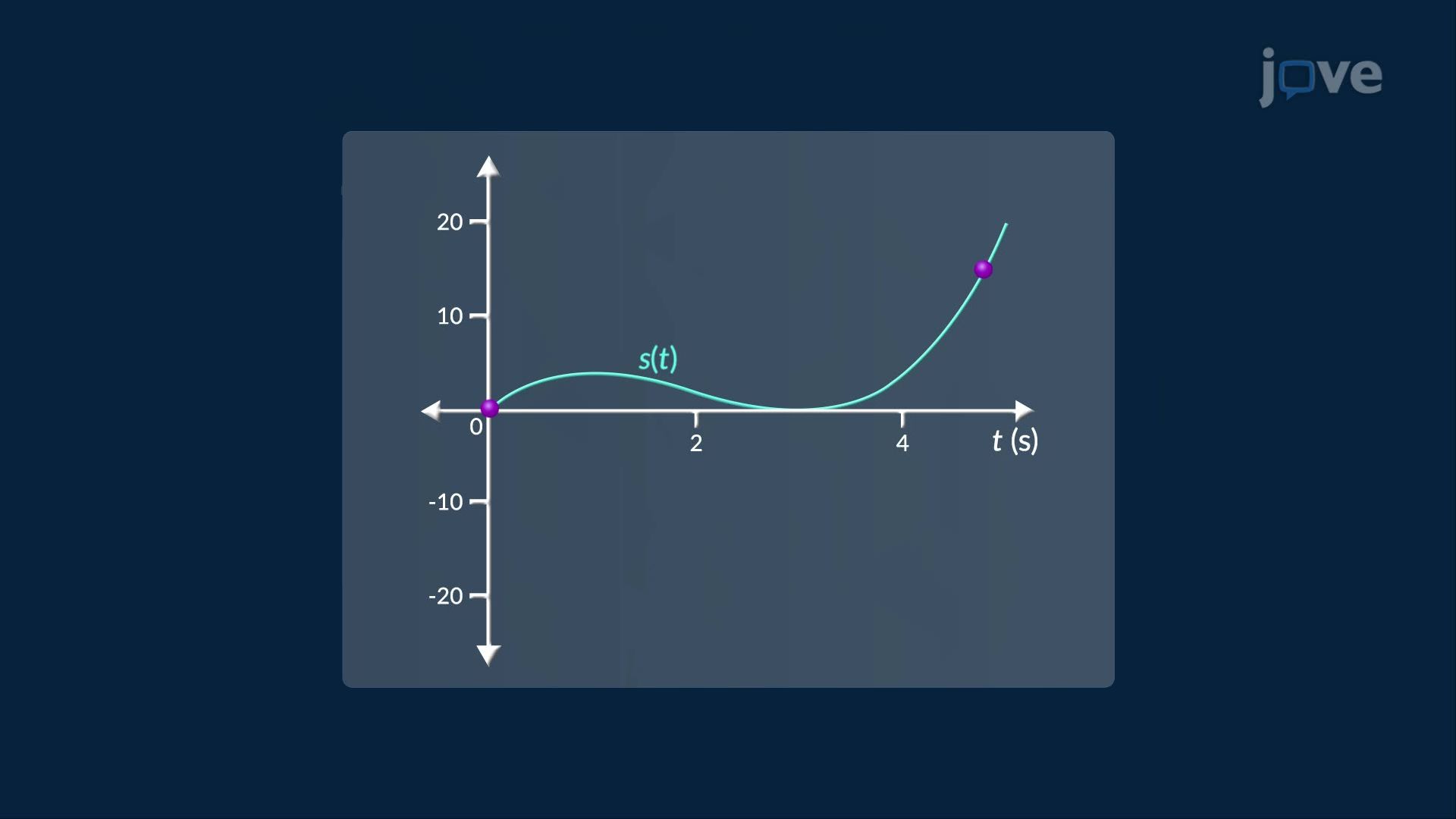
In calculus, the concept of the first derivative plays a crucial role in understanding the behavior of a function over its domain. The first derivative, denoted as f’(x), provides insight into how a function changes at any given point, much like a cyclist adjusting speed along a winding trail. By analyzing the first derivative, mathematicians can determine where a function is increasing, decreasing, or reaching critical points.
The first derivative provides a precise method for classifying intervals where a function is increasing or decreasing. A function f(x) is said to be increasing on an interval if its derivative is positive, meaning that the slope of the tangent line at any point within the interval is positive. On the other hand, the function is decreasing on an interval where the derivative is negative, indicating a downward slope. This information helps sketch the overall shape of the function’s graph and predict its behavior over different regions of its domain.
Critical points occur where the first derivative is either zero or undefined. These points are of particular interest because they may correspond to local maxima or minima. The First Derivative Test provides a systematic method for identifying these local extrema. If f’(x) changes from positive to negative at a critical point, the function attains a local maximum. If f’(x) transitions from negative to positive, the function reaches a local minimum. However, if there is no sign change in f’(x), the critical point does not correspond to a local extremum.
The first derivative has numerous applications in various fields, including physics, economics, and engineering. In physics, it describes velocity is described as the rate of change of position with respect to time. In economics, it helps analyze profit functions by identifying points where marginal cost equals marginal revenue. In engineering, it aids in optimizing design parameters by determining efficiency points. Understanding the role of the first derivative is fundamental in interpreting real-world changes and making informed decisions based on mathematical models.
The shape of a graph—whether it rises, falls, or levels off—depends on its first derivative. The first derivative gives the slope of the tangent line at any point on a graph.
A positive derivative means the function is increasing and the graph slopes upward. A negative derivative means it is decreasing and the graph slopes downward.
When the derivative is zero or undefined, the point is called a critical point. These points mark locations where the function may change from increasing to decreasing, or vice versa.
They divide the domain into intervals where the first derivative test can be used to find the function’s behavior.
If the derivative is positive before a critical point and negative after, the function reaches a local maximum. If the derivative is negative before the critical point and positive after, the function reaches a local minimum. If the sign does not change, the point is neither a maximum nor a minimum.
First derivatives also help study how diseases spread. A positive derivative shows cases increasing at that moment, while a negative derivative shows cases decreasing and the spread slowing.

 繁體中文
繁體中文