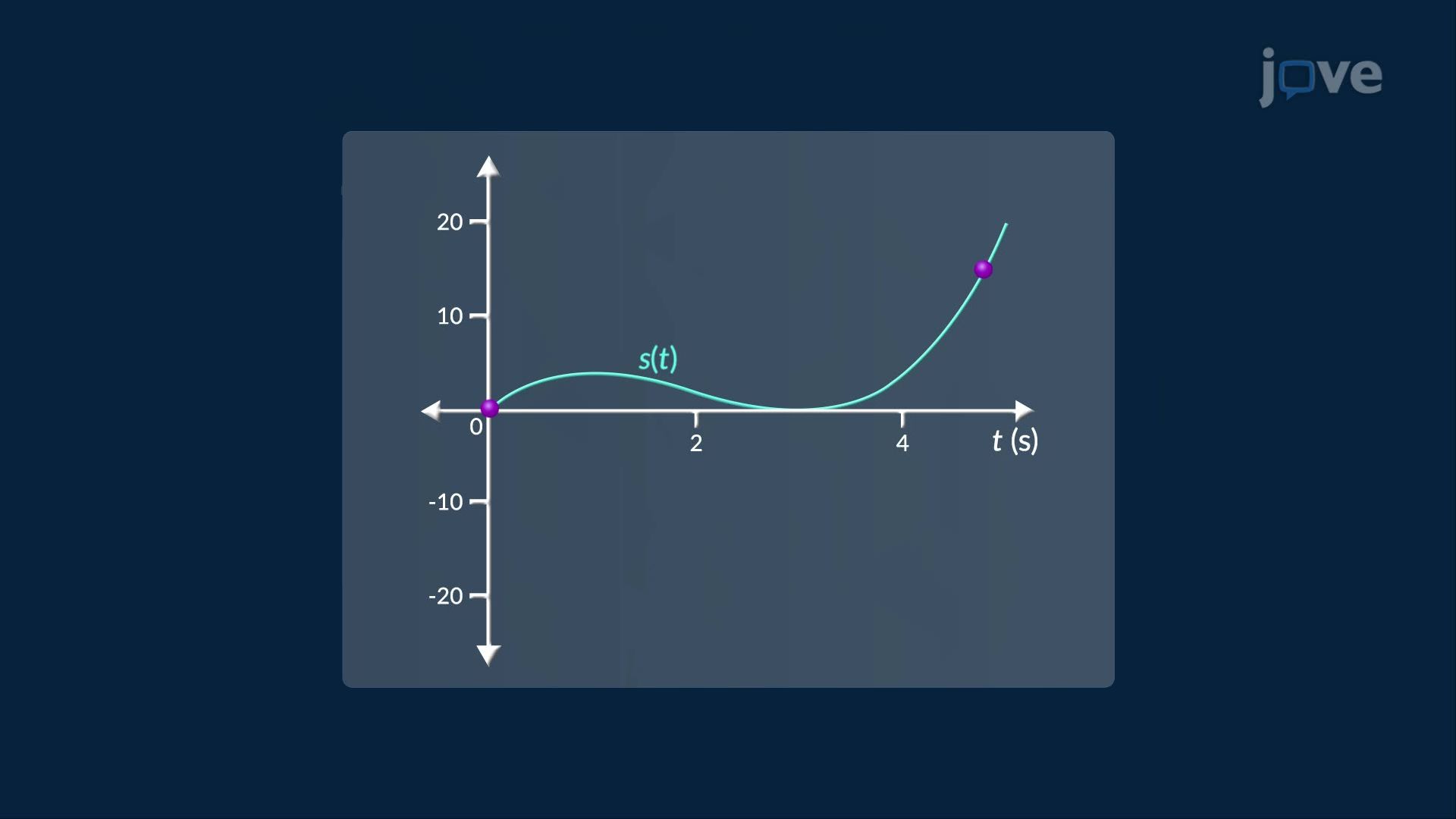
Imagine an asset price that crashes to a low point, rebounds sharply as bargain-hunters step in, and then gradually declines. Such behavior can be modeled with a smooth function whose turning points represent locally overvalued and undervalued regions. A convenient example that captures rebound followed by decay is:

The high and low points of this curve are identified using the first derivative test, which determines where the function changes from increasing to decreasing or vice versa. To begin, the first derivative is computed. Because the function is a product of a polynomial term and an exponential term, differentiation requires the product rule. After differentiating, the resulting expression is simplified by factoring out terms common to all parts of the derivative.
The derivative is then set equal to zero, and solving yields the critical points—inputs where the slope is zero or where the slope test must be checked. These critical points partition the domain into intervals for further analysis.
Next, test points are chosen within each interval, and the sign of the derivative is evaluated. A positive derivative shows that the modeled asset price is increasing over that interval, while a negative derivative shows it is decreasing. A change in the derivative from positive to negative signals a transition from rising to falling, identifying a local maximum. A change from negative to positive identifies a local minimum, corresponding to a trough in the price curve.
Finally, substituting the critical inputs back into the original function gives the corresponding price levels at these turning points. These local extrema are central to valuation analysis because they mark potential reversal regions and help quantify where momentum shifts from recovery to decline or from decline to recovery.
Imagine an asset price that crashes to its lowest point, rebounds sharply as bargain-hunters step in, and then gradually declines.
The plot’s high and low points, used in financial analysis, are identified using the first derivative test.
To understand this, model the curve as a function, and then the first derivative is found by applying the product rule.
The common terms are factored out, and each term is set to zero to get the critical points of the function, along with the corresponding intervals.
After that, test points are selected in each interval, and then the sign of the function’s derivative is examined.
A positive derivative shows that the function is increasing, while a negative derivative means that it is decreasing. When the derivative changes from positive to negative, the function shifts from increasing to decreasing, giving a local maximum. A change from negative to positive shows a local minimum.
Substituting these x-values into the original function gives their corresponding function values, which are the local extrema.
This gives the local extrema maxima and minima of the function, which are critical for analyzing asset valuation.

 繁體中文
繁體中文