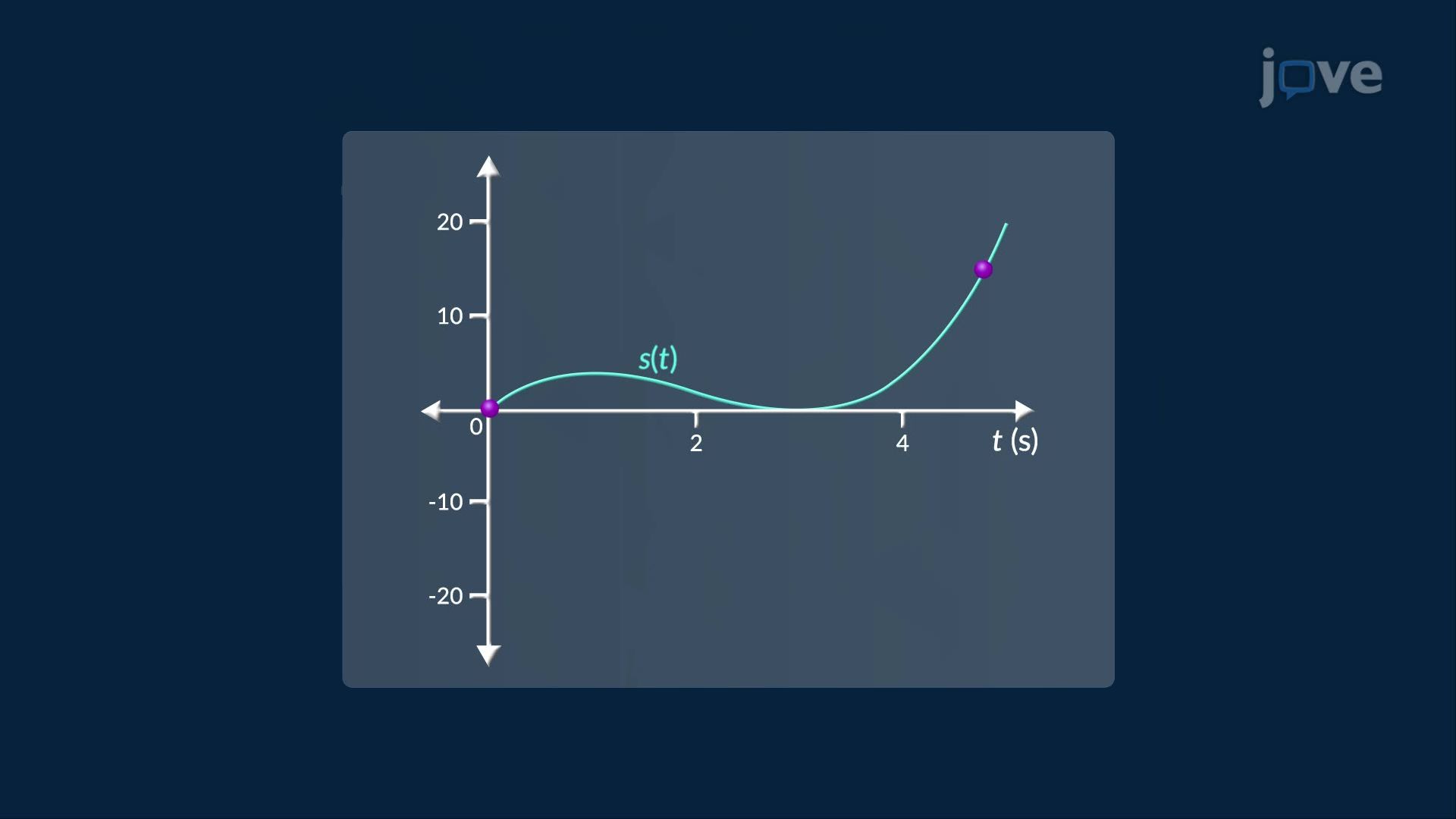
In definite integration, Riemann sums approximate the area under a curve by dividing it into subintervals and summing the areas of rectangles. When these approximations follow predictable numerical patterns, such as arithmetic or polynomial sequences, sum formulas offer a more efficient and accurate way to compute the result. In particular, the sum of consecutive integers, squares, and cubes plays an essential role in simplifying these calculations, especially when dealing with uniform partitions or geometrically structured data.
Gauss's Method for the Sum of Consecutive Integers
Carl Friedrich Gauss derived a clever method for computing the sum of the first n natural numbers. He observed that pairing the numbers in forward and reverse order yields repeated sums:


Adding these two expressions term-by-term:

Each pair sums to (n + 1), and there are n such pairs, so:

This elegant derivation offers a quick and generalizable method for finding the sum of any arithmetic sequence with a common difference of 1.
These identities provide exact values without the need for iterative addition and are fundamental in both discrete and continuous modeling scenarios encountered in calculus and applied mathematics.
In definite integrals, sum formulas for consecutive integers, squares, and cubes estimate the area using Riemann sums. They simplify calculations over a sequence or pattern.
Consider a section of a large theater, where the first row has one seat, and each new row adds one more seat, forming a sequence up to 35 rows.
The total number of seats is found using the sum formula for the first n consecutive integers, where n is the number of rows. After substituting and solving, the total number of seats can be easily calculated.
A similar concept appears in grocery stores, where cans are stacked in a square pyramid for display. Each layer has a square number of cans—one on top, four on the second layer, nine on the third, and so on.
To find the total number of cans in a five-layer display, the sum of squares formula is used, where n is the number of layers. Substituting the value of n into the formula and simplifying gives the total number of cans used in the pyramid.
If the display follows a cube-based stacking pattern instead, the sum of cubes formula instantly finds the total number.

 繁體中文
繁體中文