A car’s motion over time can be effectively analyzed using integral calculus, particularly through the concept of the definite integral applied to a velocity–time relationship. The definite integral describes how velocity accumulates over a specified time interval to produce total displacement. From a geometric perspective, this displacement is interpreted as the area under the velocity–time curve. Several key properties of definite integrals make it easier to analyze motion and understand how different velocity patterns contribute to overall movement.
Linearity of Definite Integrals
One fundamental property of definite integrals is linearity. This property allows velocity functions to be added or subtracted while preserving their accumulated effects. In practical terms, when a car’s velocity is composed of multiple components, the total displacement can be found by analyzing each component separately and then combining the results. This greatly simplifies calculations and conceptual understanding.
For example, consider two car trips, each represented by its own curved velocity–time graph. When these velocity profiles are combined, a new curve is formed that represents the total motion. The displacement associated with this combined curve is equal to the sum of the displacements from the individual trips. Similarly, subtracting one velocity profile from another produces a curve that reflects the difference in velocities, and the accumulated area under this curve corresponds to the difference in displacements. This approach allows complex motion to be broken into simpler, more manageable parts.
Integration of Constant Functions
Another important case occurs when a car moves at a constant velocity. In this situation, the velocity–time graph is a horizontal line. The displacement over a given time interval is found by multiplying the constant velocity by the duration of travel. This straightforward result provides an intuitive connection between uniform motion and definite integrals and serves as a foundation for understanding motion with varying velocity.
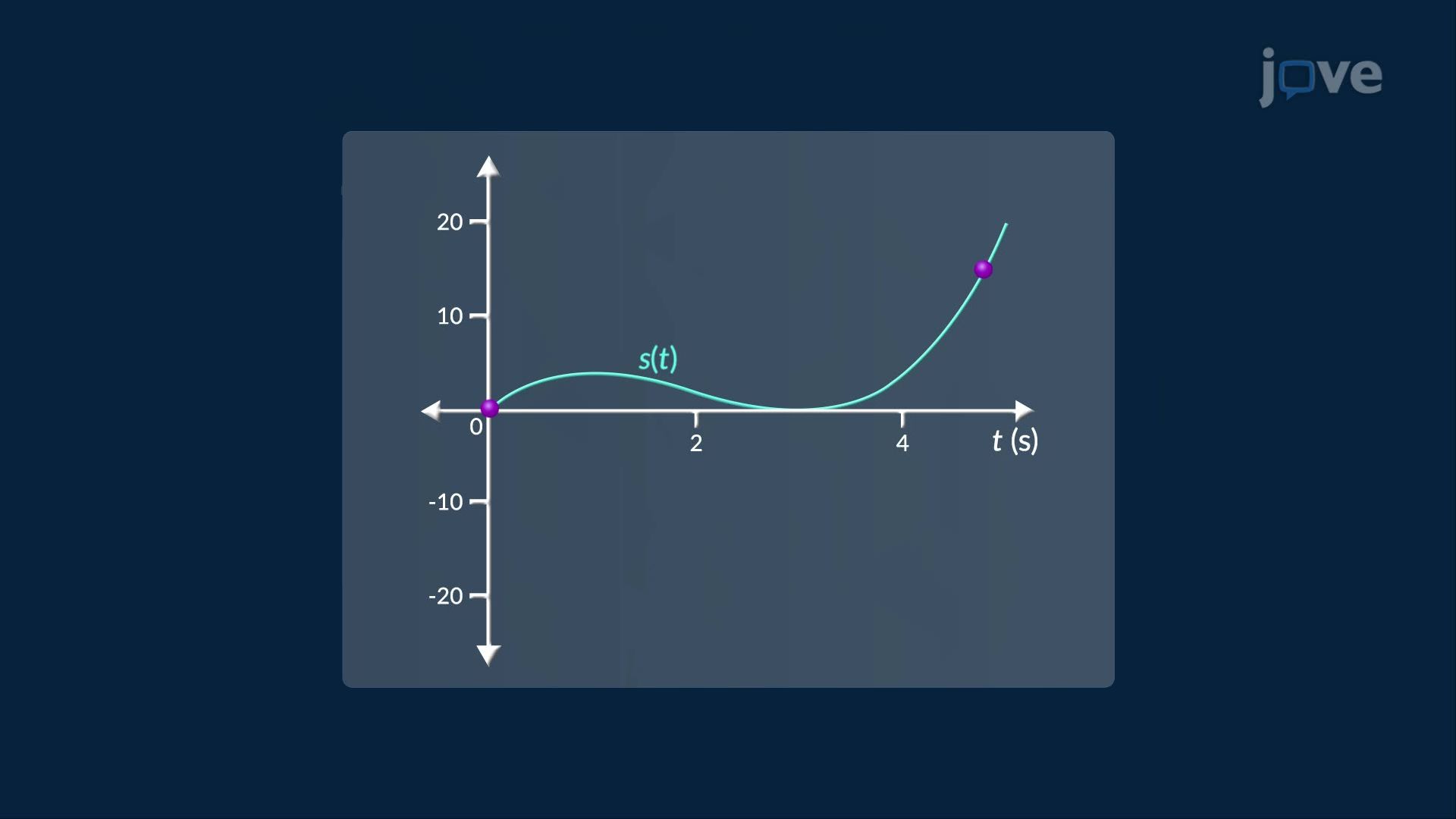
A car travels with a velocity that changes over time. Its total displacement is found using a definite integral—the area under the velocity-time curve. Several properties simplify this accumulation, like linearity and integrating constant functions.
The first property is linearity, which applies to the addition and subtraction of functions.
Consider two different trips, each with a parabolic velocity-time curve.
Adding the velocity functions of these trips creates a new combined velocity curve.
The area under the combined curve gives the total displacement by adding the integrals of the two velocity functions.
This shows that the integral of a sum equals the sum of the individual integrals.
Subtracting the two velocity functions creates a curve showing the velocity difference. The area under this difference curve gives the difference in displacement between the trips.
This shows that the integral of the difference equals the difference of the individual integrals.
The second property is integrating constant functions. When velocity stays constant, the velocity-time curve becomes a horizontal line.
The area under the line gives total displacement, showing that integrating a constant equals the constant multiplied by the time interval.

 繁體中文
繁體中文