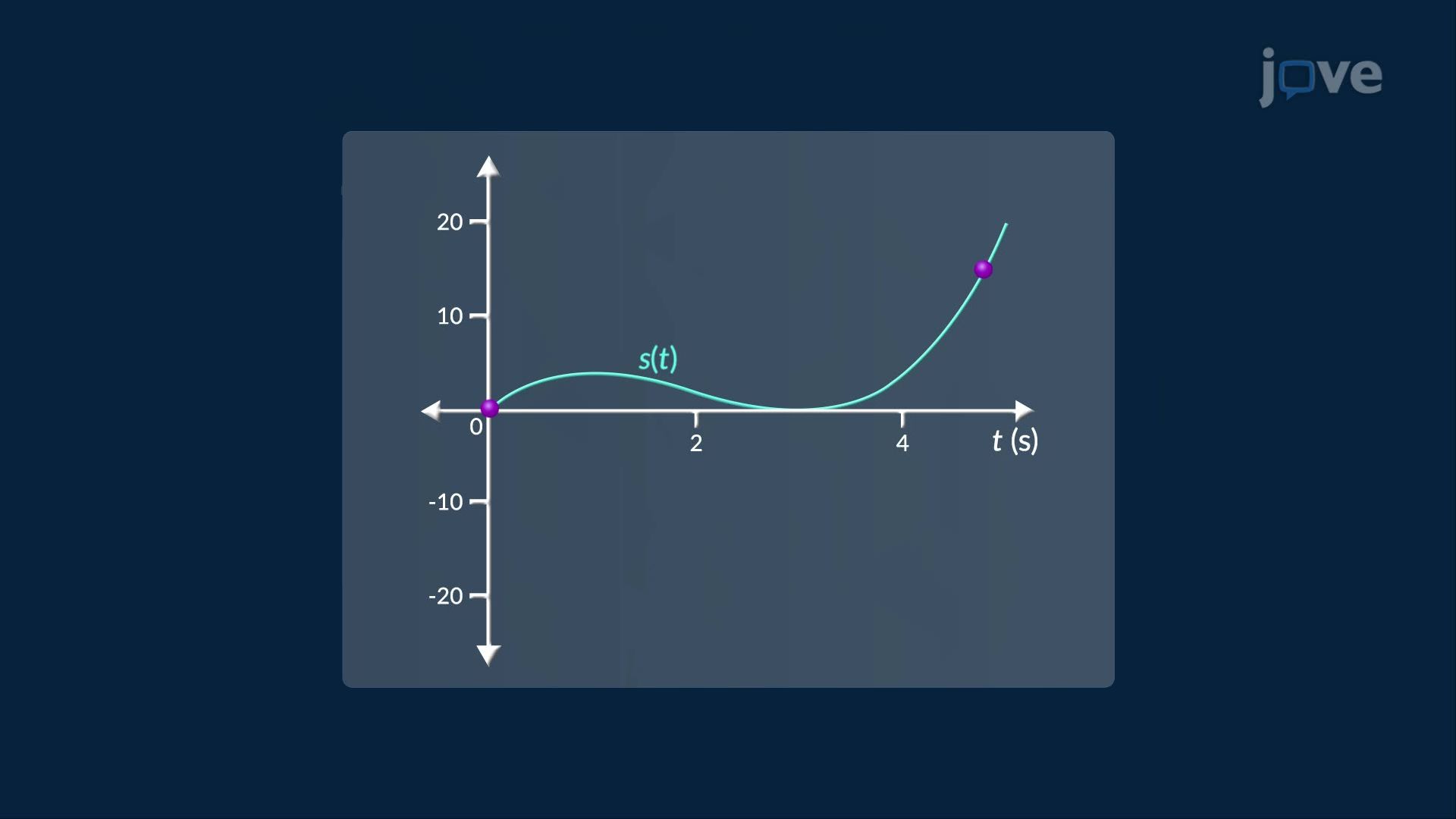
The Net Change Theorem is a fundamental principle in calculus that establishes a direct relationship between a function’s rate of change and its accumulated change over an interval. Mathematically, it states that the definite integral of a function's derivative over a given interval [a,b] yields the net change in the original function:

This theorem has significant applications in various real-world scenarios, including physics, economics, and engineering. A particularly useful application is in hydrodynamics, where it aids in determining changes in water volume in a reservoir receiving continuous inflow from multiple sources.
Consider a reservoir with an initial volume of 260 million cubic meters of water. The reservoir receives inflow from two separate sources, each described by a distinct function representing the rate of water input over time. The water enters over a six-hour period, during which the combined inflow function is integrated to measure the total volume of water added to the reservoir.
From a mathematical perspective, the total inflow at any given moment is determined by combining the contributions from both sources. The overall inflow rate is obtained by summing the individual inflow rates, resulting in a single expression that represents the combined effect of both sources at each point in time. Integrating this function over the interval [0,6] gives the net water accumulation:

Once the integral is evaluated, the total volume of water in the reservoir is determined by summing the initial water volume and the net inflow:

If this total exceeds the reservoir's maximum capacity of 300 million cubic meters, overflow occurs. In this case, the computed result confirms that the reservoir exceeds its limit, potentially leading to flooding.
To mitigate this risk, engineers must implement controlled discharge strategies such as regulated outflow channels, spillway designs, and dynamic water level monitoring. The Net Change Theorem provides a crucial computational tool for predicting and managing water levels in reservoirs, as a result, preventing structural damage and environmental hazards.
The Net Change Theorem is an interpretation of the Fundamental Theorem of Calculus. It states that when a rate function is integrated over an interval, it gives the net change in the original quantity.
This applies to real systems like reservoir management. Here, the net rate of volume change includes inflow from a river and outflow through spillways.
The inflow remains constant, while the outflow increases steadily over a 6-hour period.
The reservoir's initial volume is 260 million cubic meters, and its maximum capacity is 300 million cubic meters.
Exceeding this capacity increases internal pressure and creates a serious risk of flooding.
Applying the Net Change Theorem and integrating the net rate over 6 hours, the total change in volume is calculated.
This change is added to the initial volume to find the total volume of water at the end of the period.
The calculation shows that the final volume exceeds the reservoir’s safe capacity.
This shows how the Net Change Theorem aids in flood risk prediction and improves discharge planning and safety.

 繁體中文
繁體中文